

The Short Answer: Yes — Here's Why
You've perfected your morning skincare routine, but when you're working from home or spending the day inside, skipping sunscreen might seem harmless. Dermatologists in 2026 say otherwise. Indoor UV and light exposure is a real — and often underestimated — threat to your skin.
UV Rays Don't Stop at Your Front Door
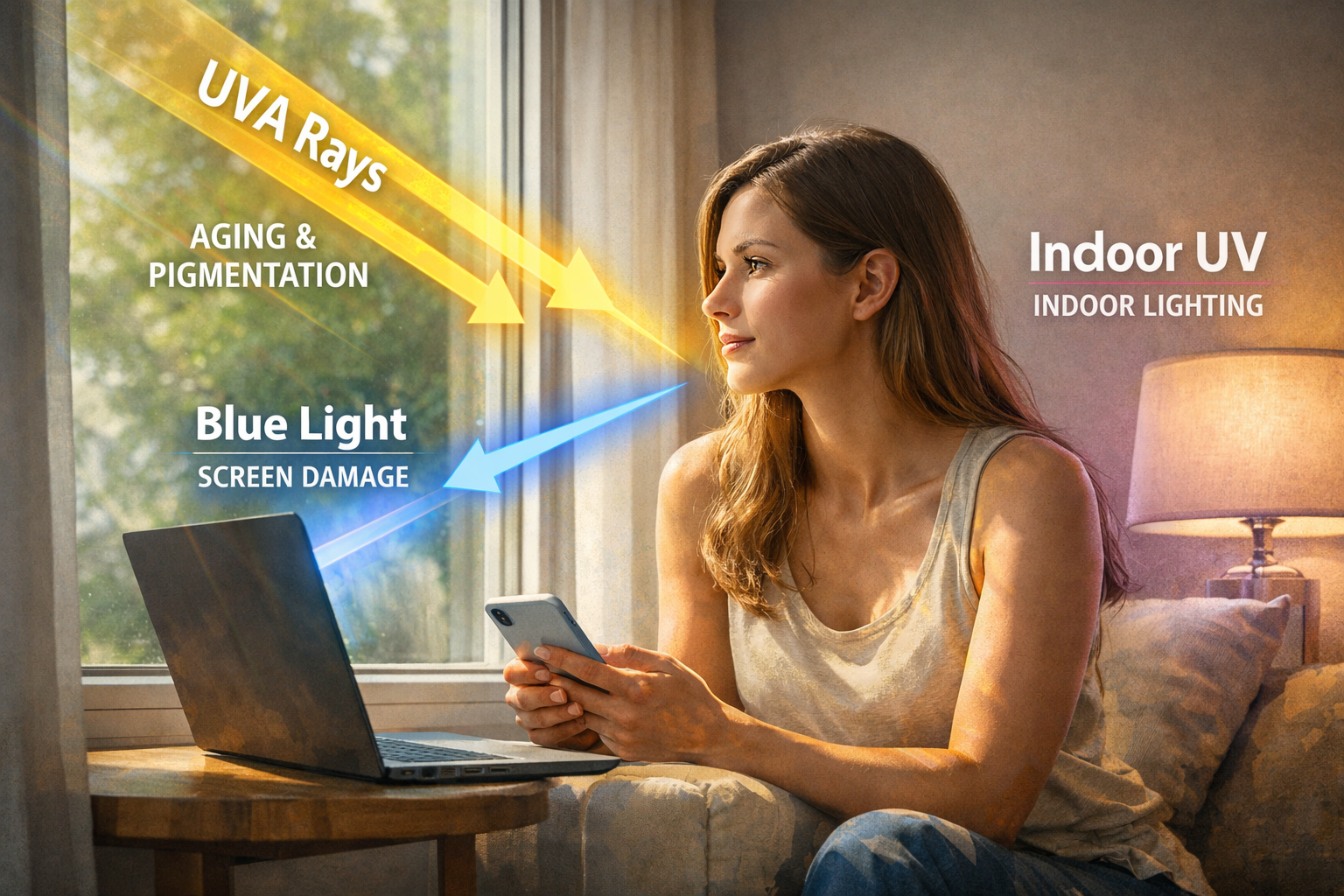
UVA rays — the ones responsible for premature aging, hyperpigmentation, and long-term skin damage — penetrate glass. That means your home office window, your car windshield, and even skylights are letting in skin-damaging radiation every single day.
UVB rays (the ones that cause sunburn) are largely blocked by glass, but UVA rays are not. And since UVA rays are present year-round, even on cloudy days, indoor exposure adds up over time.
What About Blue Light?
Screens — laptops, phones, tablets — emit high-energy visible (HEV) light, commonly known as blue light. Research suggests that prolonged blue light exposure may contribute to:
- Oxidative stress in skin cells
- Hyperpigmentation, especially in deeper skin tones
- Accelerated skin aging over time
While the science is still evolving, many dermatologists now recommend broad-spectrum SPF with antioxidants for those spending long hours in front of screens.
Who Should Definitely Wear SPF Indoors?
Sunscreen indoors is especially important if you:
- Sit near a window for several hours a day
- Work long hours in front of screens
- Are prone to melasma or hyperpigmentation
- Are on photosensitizing medications (like retinoids or certain antibiotics)
- Have a history of skin cancer or sun damage
What Kind of Sunscreen Works Best Indoors?
For indoor use, you don't need a heavy, water-resistant formula. Look for:
- Lightweight, non-greasy textures — like sun sticks or fluid SPFs that won't feel suffocating
- Broad-spectrum SPF 30–50+ — sufficient for indoor exposure levels
- Antioxidant-rich formulas — to combat blue light and free radical damage
- Hydrating ingredients — hyaluronic acid, niacinamide, or centella for added skincare benefits
Korean sunscreens are particularly well-suited for daily indoor wear — they're formulated to be comfortable enough for all-day use without the heavy feel of traditional Western SPFs.
How Often Should You Reapply Indoors?
If you're sitting away from windows and not sweating, reapplying every 2–3 hours is generally sufficient. If you're near a sunny window, treat it like outdoor exposure and reapply every 2 hours.
Sun sticks make indoor reapplication effortless — a quick swipe over makeup or bare skin keeps you protected without disrupting your day.
Dermatologist Takeaway for 2026
The consensus among dermatologists is clear: daily SPF is non-negotiable, whether you step outside or not. The cumulative effect of indoor UV and blue light exposure over months and years is significant — and entirely preventable with the right sunscreen habit.
Start with a lightweight SPF that you actually enjoy wearing. The best sunscreen is the one you'll use every day.
Browse our curated selection of Korean sunscreens — lightweight, skin-loving formulas perfect for daily indoor and outdoor wear.
Share:
Isntree Hyaluronic Acid Airy Sun Stick SPF 50+ PA++++ — Our Honest Review
How to Build a Simple Night Routine with Retinol and Morning Sunscreen